
Upper vs Lower Back Pain During Pregnancy: Causes, Symptoms & Relief
Pregnancy is an exciting time, but it also places enormous demands on your body. As your baby grows, your posture changes, your centre of gravity shifts, and the joints and muscles that support your spine begin adapting to prepare for birth.
It’s no surprise that back pain is one of the most common complaints during pregnancy.
One question we hear regularly at Prime Health Co. is:
“Is this normal?”
In many cases, the answer is yes. However, not all pregnancy-related back pain is the same. Understanding where your pain is coming from is often the first step towards finding relief.
While many women expect discomfort in their lower back, they’re often surprised when pain develops between the shoulder blades or around the neck instead. These two types of pain usually have different causes and often respond to different management strategies.
Why Does Back Pain Occur During Pregnancy?
Pregnancy changes almost every part of the way your body moves.
As your baby grows, more weight is carried at the front of your body. Your abdominal muscles stretch, your posture gradually changes, and the muscles supporting your spine have to work much harder to keep you upright and balanced.
At the same time, pregnancy hormones soften the ligaments around your pelvis in preparation for childbirth. While this increased flexibility is completely normal, it can also reduce stability around the pelvis and lower back, making everyday movements more demanding.
Most back pain during pregnancy isn’t caused by a single problem. Instead, it’s usually a combination of changing posture, increased load on the spine, muscle fatigue and altered movement patterns.
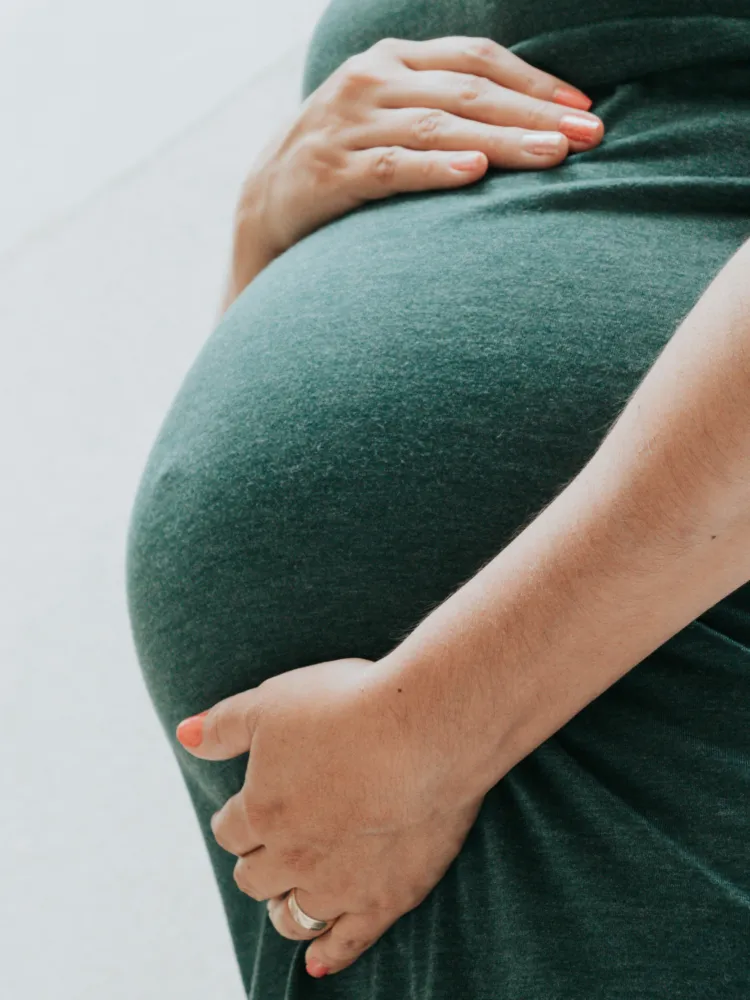
Upper Back Pain vs Lower Back Pain
Although both are commonly referred to as “back pain”, they often feel very different.
Upper back pain is usually felt between the shoulder blades, across the shoulders or into the neck. It is often related to posture, muscle fatigue and the increasing weight carried through the front of the body.
Lower back pain is generally felt around the lumbar spine, pelvis or hips. It is more commonly associated with changes in pelvic stability, increased loading through the lower back and altered walking mechanics.
Understanding which type of pain you’re experiencing helps determine the most appropriate treatment and advice.
Why Upper Back Pain Develops During Pregnancy
Upper back pain often receives less attention than lower back pain, but it can be just as frustrating.
As pregnancy progresses, many women naturally begin leaning backwards to compensate for the growing baby. At the same time, the shoulders often round forwards, particularly as breast size increases. This combination places extra strain on the muscles between the shoulder blades.
Women who work at a computer, spend long periods driving or regularly look down at young children often notice these symptoms even more.
In our clinic, many pregnant patients describe upper back pain as something that gradually builds throughout the day rather than appearing suddenly. It often feels manageable in the morning but becomes increasingly uncomfortable by the afternoon or evening as the muscles become fatigued.
Common symptoms include:
- Aching between the shoulder blades
- Tightness through the shoulders and neck
- Burning or muscle fatigue across the upper back
- Discomfort after prolonged sitting
- Headaches associated with neck and shoulder tension
Why Lower Back Pain Is So Common
Lower back pain is one of the most common musculoskeletal complaints during pregnancy.
As your baby grows, the lower back and pelvis deal with increasing loads every day. Simple activities like standing, walking, climbing stairs or rolling over in bed can be much harder than before pregnancy.
Many women notice discomfort around the sacroiliac joints (the joints at the back of the pelvis), while others experience pain across the lumbar spine or into the hips.
One of the most common comments we hear is:
“Rolling over in bed is the worst part of the day.”
This can often indicate that the pelvis is contributing to the pain rather than the spine alone.
Common symptoms include:
- Aching across the lower back
- Pain around the hips or buttocks
- Discomfort after standing or walking
- Difficulty getting out of bed
- Pain when changing positions
- Stiffness first thing in the morning
Could It Actually Be Pelvic Girdle Pain?
Many women assume they have lower back pain when the real source of their symptoms is the pelvis.
Pelvic Girdle Pain (PGP) occurs when the joints and ligaments around the pelvis become irritated or unstable during pregnancy.
Symptoms often include:
- Pain around the pubic bone
- Discomfort over one or both sacroiliac joints
- Pain when walking
- Difficulty climbing stairs
- Discomfort standing on one leg
- Pain getting in or out of the car
- Pain rolling over in bed
Because pelvic girdle pain and lower back pain can feel very similar, a professional assessment is often helpful in identifying exactly which structures are involved.
Practical Ways to Reduce Pregnancy Back Pain
While every pregnancy is different, there are several simple strategies that can make a noticeable difference.
Keep Moving
Gentle movement is often better than prolonged rest.
Walking, swimming and pregnancy-appropriate exercise help maintain strength, improve circulation and reduce stiffness. Remaining active also helps the muscles supporting your spine cope with the increasing demands of pregnancy.
Change Positions Regularly
Many women notice their pain becomes worse after sitting or standing in one position for too long.
If you work at a desk, try standing up every 30 to 45 minutes. If you’re on your feet for long periods, look for opportunities to sit down and give your back a break.
Small changes throughout the day are often more effective than one long stretching session.
Pay Attention to Everyday Activities
Simple tasks often become more demanding as pregnancy progresses.
When lifting, bend through your knees rather than your back.
If you already have a toddler, try alternating which side you carry them on rather than always resting them on the same hip. Repetitive one-sided loading is a common reason pelvic and lower back pain become more noticeable.
Improve Your Sleeping Position
Many pregnant women find sleeping on their side with a pillow supporting the knees and another under the abdomen reduces strain through the lower back and pelvis.
If turning over in bed is painful, keeping your knees together while rolling can sometimes reduce stress on the pelvis.
Maintain Good Posture, Without Overthinking It
Good posture doesn’t mean standing perfectly straight all day.
Instead, aim to avoid spending long periods slouched over your phone or computer. Gentle movement throughout the day is usually far more beneficial than trying to “sit perfectly”.
When Should You Seek Professional Advice?
Some discomfort during pregnancy is common, but persistent pain shouldn’t simply be accepted as something you have to live with.
We recommend seeking assessment if your pain:
- Is becoming progressively worse
- Affects your sleep
- Limits walking or daily activities
- Radiates into the leg
- Causes significant pelvic instability
- Isn’t improving with simple self-management strategies
You should seek immediate medical attention if your pain is accompanied by vaginal bleeding, fever, severe abdominal pain, painful urination or any concerns about your pregnancy.
Also Read: Sciatica During Pregnancy
How Pregnancy Chiropractic Care May Help
At Prime Health Co., we understand that every pregnancy is different.
Rather than assuming all pregnancy back pain has the same cause, we begin by identifying exactly where your symptoms are coming from and what movements are aggravating them.
This allows treatment to be tailored to your individual needs.
Depending on your presentation, your chiropractor may:
- Assess posture and movement patterns
- Evaluate spinal and pelvic function
- Use gentle pregnancy-specific manual therapy techniques
- Provide personalised exercises and mobility advice
- Recommend practical changes to reduce strain during everyday activities
Our goal isn’t simply to reduce pain during your appointment. It’s to help you stay comfortable, confident and active throughout your pregnancy.
Why Choose Prime Health Co.?
Our chiropractors regularly work with women throughout every stage of pregnancy.
We understand that pregnancy care isn’t about forceful treatment or “putting bones back into place.” It’s about understanding how your body is changing, identifying the source of your discomfort and helping you move as comfortably as possible.
Whether you’re experiencing upper back tension from changing posture, lower back pain after long days on your feet or pelvic girdle pain that’s making it difficult to roll over in bed, we’ll work with you to develop a management plan that’s appropriate for both you and your pregnancy.
Pregnancy Doesn’t Have to Mean Living With Back Pain
Back pain is incredibly common during pregnancy, but that doesn’t mean every ache should simply be accepted as “part of being pregnant.”
Upper back pain is often related to posture and muscle fatigue, while lower back and pelvic pain are more commonly associated with the physical changes occurring through the spine and pelvis as your pregnancy progresses. Understanding the difference is the first step towards finding the right treatment.
If your back pain is affecting your sleep, limiting your movement or stopping you from enjoying your pregnancy, a thorough assessment can help determine what’s driving your symptoms and which treatment options are most likely to help.
At Prime Health Co. in Redland Bay, we’re passionate about helping women stay active, comfortable and confident throughout pregnancy. If you’re experiencing pregnancy-related back pain, we’d love to help you move more comfortably through every stage of your journey.
You can learn more about practitioners including Dr. Michael Benporath and Dr. Jamie Robbertze through the clinic website.

About the author:
Dr Michael Benporath is a chiropractor with a postgraduate International Certificate in Sports Chiropractic. Michael practices at Prime Health Co. in Redland Bay, Brisbane.
